

Citizen Tsuyosa vs Tissot PRX Powermatic 80: My Hands-On Comparison

This article may contain affiliate links, which means if you choose to purchase a product using the link, I may get a small commission. This is at no additional cost to you and enables me to keep writing reviews of watches and products I genuinely think you will enjoy or find useful.
I can see why the Citizen Tsuyosa and Tissot PRX end up being compared so often. You’ve got the retro 70s styling, integrated bracelets and a choice of colourful dials. If that’s the sort of watch you enjoy, there’s a fair chance both have caught your eye.
They certainly caught mine. I own both, have worn them extensively, and enjoy having them in my collection.
Both families have grown quite a bit since I first wrote this comparison. There’s now much more choice across sizes, colours, movements and configurations, so it’s worth exploring the wider ranges too. Here, though, I’m comparing my own original 40mm Citizen Tsuyosa NJ015 and 40mm Tissot PRX Powermatic 80.
There’s a price difference to think about, isn’t there? The Tsuyosa already gives you plenty to enjoy, so what makes the PRX worth spending more on?
For me, the answer is in some of the smaller details.
My quick verdict
The Tsuyosa is excellent value. I like its dial, I’ve found it comfortable, and it gives you an automatic watch with plenty of character for the money.
The PRX just edges ahead for me, though. Its finishing and movement features help, but that blue waffle dial is a big part of the attraction too.
Would choosing the PRX make the Citizen redundant? Not in my collection. I enjoy both, and the right choice for you will depend on your budget, what catches your eye and how each one feels on your wrist.
The mint-green PRX pictured further down shows another colour option in the range, this time with a quartz movement.
Design and dial
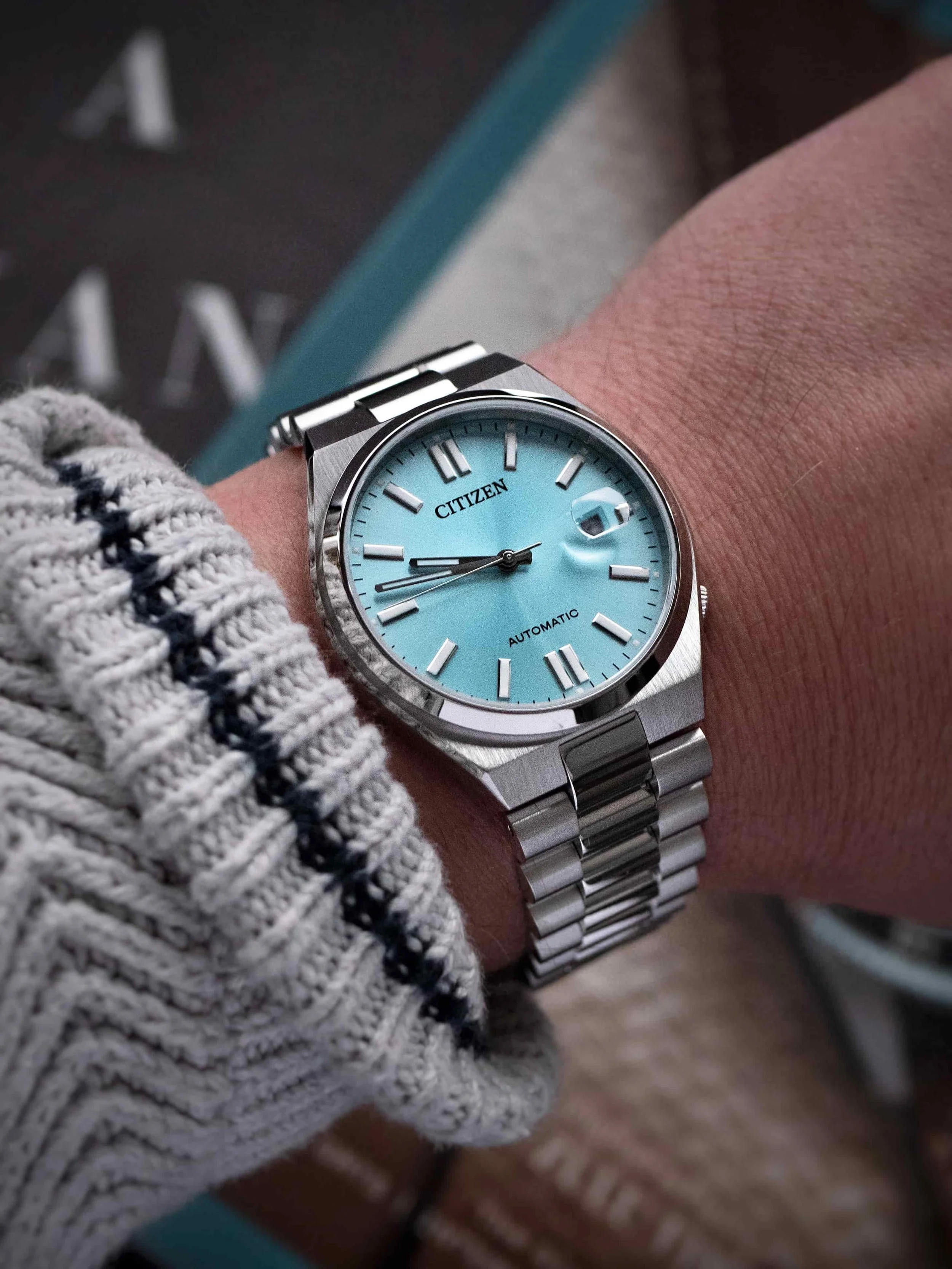
The turquoise-blue dial is what really draws me to this Tsuyosa. It’s a lovely colour, and the sunburst finish gives it something extra as the light moves across it.
Citizen has kept the rest of the dial fairly simple. There’s the brand name and Automatic text, but nothing that takes too much attention away from the colour. I like that. When the dial is such a big part of the appeal, you don’t need to keep adding things.
The 40mm stainless-steel case works nicely with it too. Brushing across the top gives it that sporty feel, while the polished sides bring a slightly dressier touch.
Put the PRX beside it and you can see a different approach to the same broad idea.
The Tissot has sharper, more angular 70s lines, with the bracelet flowing straight out of the case. I particularly like the fine brushing against the polished bezel, and the polished bevelled edges of the bracelet give you more to appreciate when you look closely.
Then there’s that deep blue waffle dial.
That was a big part of what won me over, as I explain in my hands-on PRX review. I really like the texture and depth it brings to the watch. The Tsuyosa’s sunburst dial has plenty going for it, but if I’m choosing between these two dials, the PRX gets my vote.

Comfort, bracelets and clasps
The Tsuyosa has been a pleasure to wear. I like the president-style bracelet, particularly those polished centre sections, and the solid links feel good on the wrist.
Sizing is done with push pins, and once adjusted, I’ve found it comfortable. That matters far more to me than having an impressive-looking bracelet that I don’t actually enjoy wearing.
The clasp is where the Citizen gives a little more away.
Its stamped-steel construction does the job, but pick up the Tissot PRX Powermatic 80 and the butterfly clasp feels more substantial. It’s one of those differences that becomes fairly obvious when you have both watches in front of you.
Would I prefer a nicer clasp on the Citizen? Of course. But at this price, I can understand the compromise, and it hasn’t stopped me enjoying the watch.
With either of these, I’d try one on before buying if you can. They both measure 40mm, but with an integrated bracelet, the way the case and bracelet sit together makes a real difference. The numbers are useful; your wrist will tell you more.
Movements and everyday use
Citizen Tsuyosa
The Tsuyosa uses Citizen’s calibre 8210, an automatic movement running at 21,600 vibrations per hour. It winds while you wear it, and you can also wind it by hand using the crown. Citizen confirms that in its official 8210 instructions.
Citizen’s February 2025 specifications for the ice-blue NJ0151-88M list approximately 42 hours of power reserve, manual winding and a stop-second function. That last feature means the seconds hand stops when you pull out the crown to set the time. For an earlier example, check the specification of the exact watch rather than assuming every NJ015 is identical.
In my time with the Tsuyosa, I’ve found the movement reliable. There’s also something I rather like about seeing the gold-colour finishing through the exhibition caseback.
I don’t usually favour display backs, so it wouldn’t normally be something that helped sell me a watch. Here, though, I do enjoy the view.
You also get a sapphire crystal and a 50-metre water-resistance rating.

Tissot PRX Powermatic 80
The PRX Powermatic 80 has an ETA-based automatic movement with up to 80 hours of power reserve.
That’s a useful difference, especially when you have more than one watch to wear. You can leave the PRX off your wrist for longer before it runs down, which makes switching between watches a little easier.
I also like the signed crown and the finishing visible through the caseback. They’re small touches, but they’re part of what I appreciate when handling the Tissot. How much they matter will come down to what you enjoy in a watch.
The 40mm steel Powermatic 80 also has a sapphire crystal and a 100-metre water-resistance rating. Those are the specifications for the automatic model we’re comparing here.
Is the PRX worth the extra money?
This is where having both watches in front of me helps. I can appreciate what the PRX offers without feeling that the Tsuyosa is somehow lacking for what it costs.
The Citizen already gives you an enjoyable automatic watch, a colourful dial and that integrated-bracelet look. If the PRX is a stretch for your budget, there’s plenty to like here.
The Tissot’s extra cost makes more sense if you notice and enjoy the details we’ve covered. I do, but that doesn’t mean everyone will get the same pleasure from them.
I wouldn’t buy the PRX simply because it’s Swiss. Equally, I wouldn’t think less of the Citizen because it costs less. Having worn both, that would feel like a rather poor way to choose between them.
Compare the actual prices when you’re ready to buy, too. The reference, retailer and condition can make quite a difference, particularly if you’re considering pre-owned watches. The gap won’t always be as simple as one costing twice as much as the other.

My blue-dial Tissot PRX Powermatic 80 on an MTR-Watches rubber strap.
My personal verdict
If I could only keep one of these two, I’d choose the PRX.
That blue waffle dial did a lot of the convincing, and the finer finishing gives me more to appreciate when I put the watches side by side. Those are the details I’d be paying extra for.
Thankfully, I don’t have to choose. I’m glad to have the Tsuyosa in my collection, and I still think it’s an enjoyable watch for the money. Within Citizen’s range, I slightly prefer the Tsuyosa Small Seconds, but that’s a different comparison.
For this one, the Tissot just gets the nod.

Citizen Tsuyosa vs Tissot PRX: specifications
These are the 40mm automatic models discussed here. Both ranges include other versions, so check the exact reference before buying.
Case diameter: 40mm for both watches.
Movement: Citizen calibre 8210 automatic with hand-winding; Tissot Swiss automatic Powermatic 80.
Power reserve: Approximately 42 hours for the NJ0151-88M in Citizen’s February 2025 specifications, compared with up to 80 hours for the PRX.
Crystal: Sapphire on both.
Water resistance: 50 metres for the Tsuyosa; 100 metres for the PRX.
Bracelet: Integrated stainless steel on both, with different bracelet and clasp designs.
It’s useful to have those details together, but I’d still choose the watch I enjoyed wearing most. A better number on a specification list won’t make up for a watch that doesn’t feel right on your wrist.
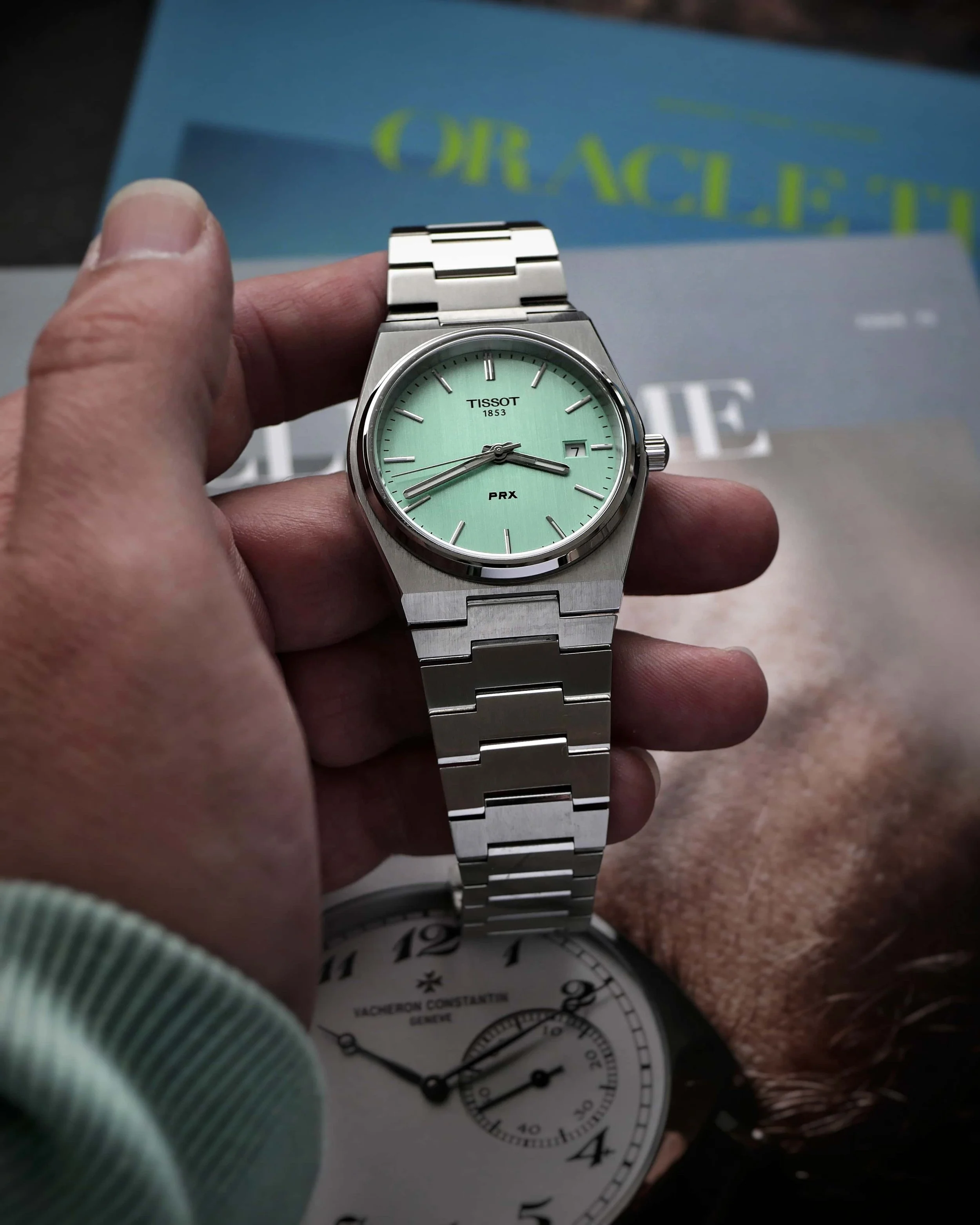
The mint-green PRX shown here is the quartz version.
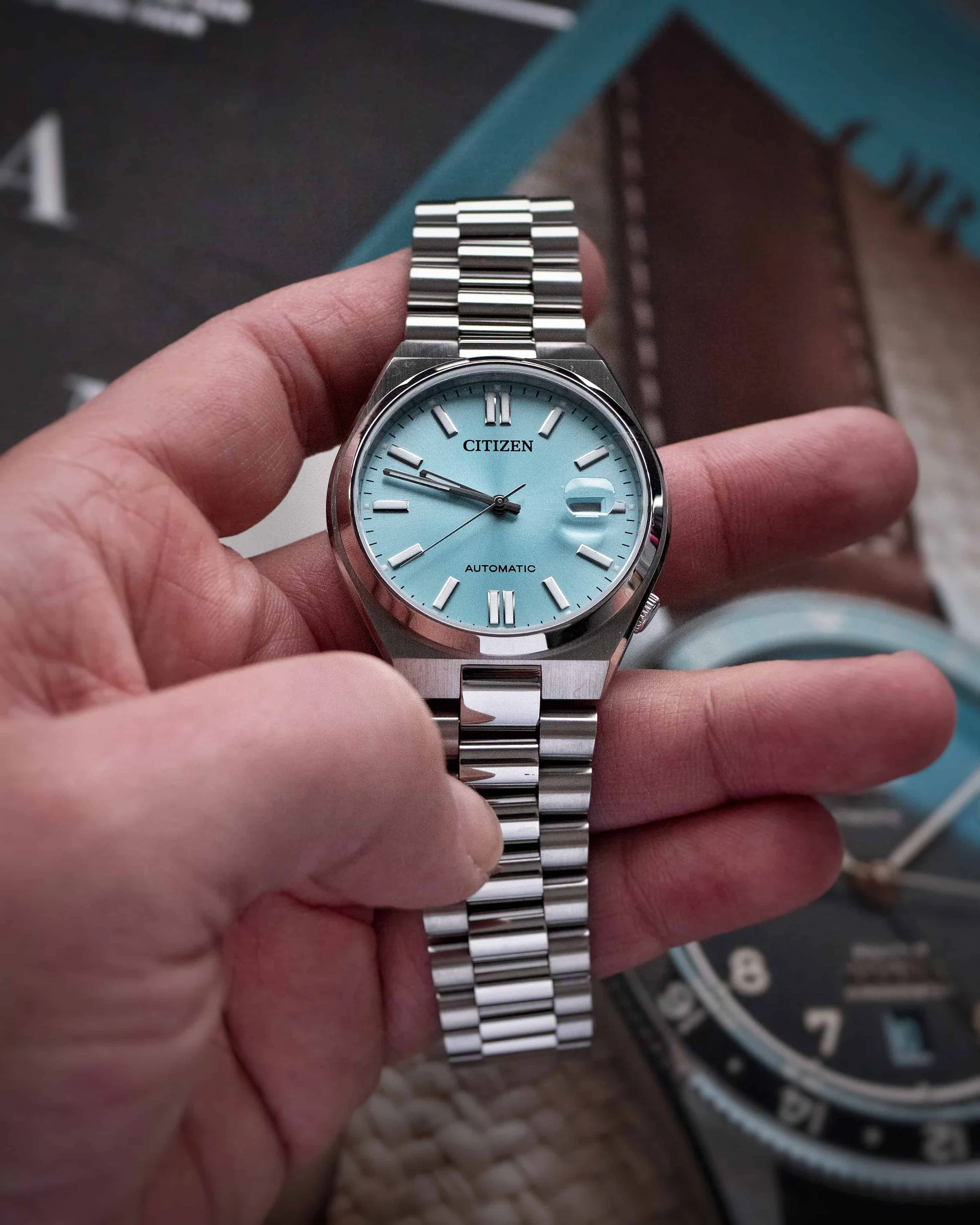
The Citizen Tsuyosa in turquoise blue, on its original steel bracelet.
Frequently asked questions
Is the Tissot PRX worth the extra money?
For me, the PRX just edges ahead. I prefer the finer finishing, the butterfly clasp feels more substantial, and the longer power reserve is useful when switching between watches. The Tsuyosa still offers excellent value, though. I’d compare the prices available and decide how much those differences matter to you.
Can you hand-wind the Citizen Tsuyosa?
Yes. You can wind the Citizen 8210 by hand using the crown, and it also winds automatically while you wear it. Citizen confirms this in its official instructions.
Does the Tsuyosa have a hacking movement?
Hacking means the seconds hand stops when you pull out the crown to set the time.
Citizen’s February 2025 specifications list a stop-second function for the calibre 8210 in the NJ0151-88M, along with automatic and manual winding. For an earlier example, check the specification of the exact watch if hacking is important to you.
How do the bracelets compare?
I like the Tsuyosa’s president-style bracelet and polished centre links, and I’ve found it comfortable. Its stamped-steel clasp feels more basic than the PRX’s butterfly clasp. You notice the difference when handling them together, but it hasn’t stopped me enjoying the Citizen.
Can I swap out the strap?
Yes, but the integrated designs mean an ordinary straight-ended strap won’t fit directly.
The blue PRX Powermatic 80 pictured here is on one of my rubber straps for the 40mm Tissot PRX. That’s a fitted option for compatible 40mm PRX models.
If you’d like to use a standard 22mm strap instead, I also sell strap adaptors for the 40mm PRX.
The fitted rubber strap is a separate option, so check your model before ordering either.
For the Tsuyosa, finding a suitable alternative strap takes a little more care too.
What about the Tissot PRX Quartz?
The mint-green PRX pictured above shows another colour available in the range, this time with a quartz movement.
This comparison focuses on the automatic Powermatic 80. If the quartz version has caught your eye, check its own price and specifications—the Powermatic 80 movement details won’t apply to it.
You can also browse the current ranges on the official Citizen and Tissot websites.